The final part of any archaeological investigation
Every archaeological investigation that is conducted produces an archaeological archive - the final component of the investigation and a primary record of the archaeology.
The archive will routinely consist of documents, photographs, original records, permatrace drawings, finds, ecofactual remains and digital data.
The deposition of archives with institutions and museums is a necessity with planning conditions and projects.
Major governing bodies and heritage organisations, including the IfA (Institute for Archaeologists), English Heritage and county planning authorities, specify that archaeological archives are deposited with museums in accordance with national guidelines to ensure effective long-term curation.
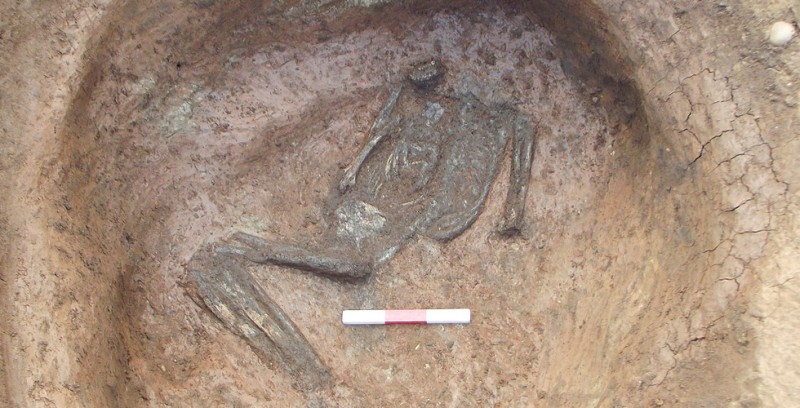
The feature image (above) shows an articulated prehistoric burial in Staffordshire.
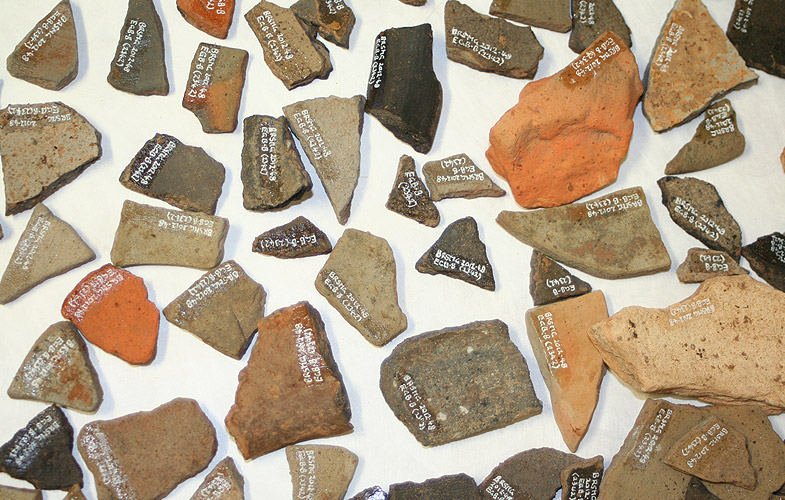
Marked pottery sherds from Emerson’s Green, Bristol (Kevin Mounsey,
photographer)
The archives team prepares finds, drawings and records to museum’s individual standards. Digital copies of archives are sent to the National Archaeological Record and county-specific Historic Environment Records. Wardell Armstrong Archaeology fully supports digital archiving with OASIS (Online AccesS to the Index of Archaeological InvestigationS) and ADS (Archaeology Data Service) for long-term curation and automatic technical upgrading.
The full range of post-excavation services »

Leicester pottery analysis
The post-excavation specialist team has excellent working relationships with a range of planners, engineers, architects, archaeologists and heritage managers.