Balancing the interests of developers and development control officers
It’s not unknown for developers to baulk at or resent so-called archaeological “predetermination work” After all, it represents a cost at a stage when they haven’t yet got planning permission, so it’s not surprising that some see it as an obstacle.
It’s nonetheless a material consideration in the planning processes contained in
government and local authority policies, and therefore has to be addressed.
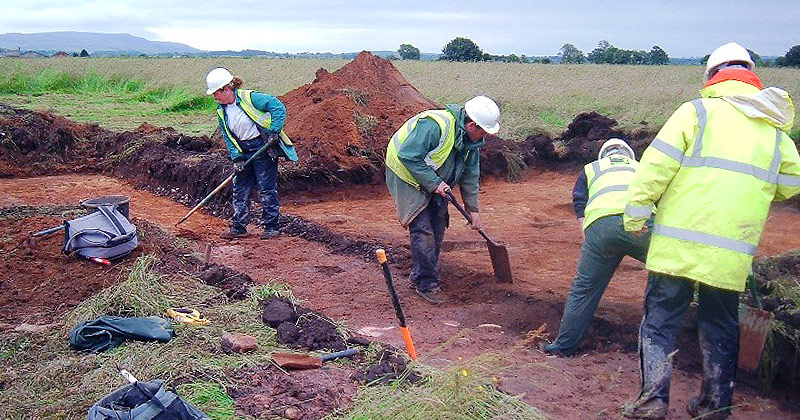
A county archaeologist – or development control officer (DCO) as they’re also called – will often require a developer to carry out archaeological evaluation work before permission is granted so that they know how archaeological remains within a development site should be treated once consent is given. In practice this can often mean attaching a planning condition for archaeology to the entire development.
The benefits of identifying archaeology early on a site
But in reality, it has been observed many times that it can be of enormous benefit to developers to be able to identify at an early stage any major risks that they might meet later on in the development process.
It’s much better to know early on if there’s significant archaeology within a site boundary than if it turns up when machines and contractors are on site. Late discoveries can have huge implications in terms of time and money, or even stop the development completely.
Read more about on-site archaeological evaluation »
It is a balancing act for an archaeological consultant.
While the archaeology has to be done justice the interests of the developer also have to be taken into account. The planning authorities and in some cases English Heritage, will need to be satisfied that their standards are being met. And the developer needs an archaeological consultant with the right expertise, experience and business sense to help protect their commercial interests by minimising their risks and the amount of work they have to do.