Avoiding the potential for development delay
Commingled human remains may include small amounts of bone from disturbed burials or large amounts of bone retrieved from medieval or post-medieval ‘charnel deposits’.
One example of a site with commingled human remains comprised the grounds of St Peter’s Church, Monkwearmouth, Sunderland.
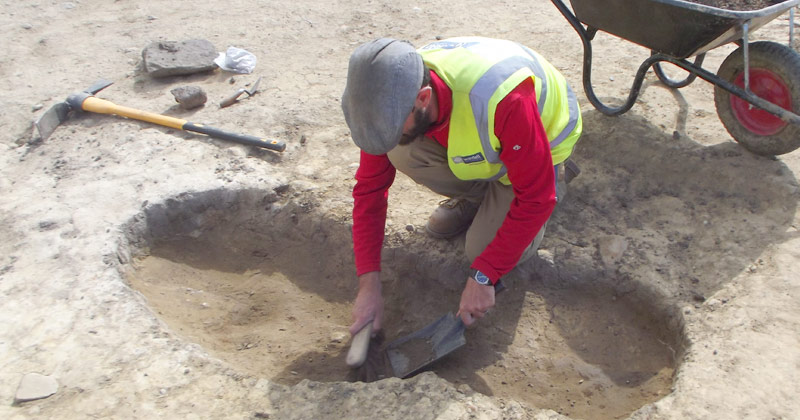
A trial trench excavated in the grounds revealed pits containing large quantities of human bone (pictured). Analysis of the bones revealed that there was a minimum of 21 individuals, from infant through to elderly.
Radiocarbon dating
No dating evidence was recovered from this deposit, so radiocarbon dating was essential. This confirmed that the human remains were of Anglo-Saxon date.
Although the remains were of archaeological provenance and of unknown identity, the nature of the site as a known Christian burial ground dictated that the remains must be returned for reburial. The remains were returned to the church by the author and were reinterred in the crypt after burial rites were given.
Benefit to the developer
Although this was a site with a high potential for discovering human remains, a burial licence was obtained before the archaeological evaluation took process.
This ensured that there was no delay in the lifting of the remains and thus no delay for the completion of the project.