Saltom Pit - safeguarding a Scheduled Ancient Monument
Client: Entec UK Limited
Location: Near Whitehaven Harbour, Cumbria, UK
Project description: Coastal archaeology - a watching brief during consolidation and remediation works at the site
The watching brief was maintained during this work and revealed the presence of archaeological features and horizons associated with the 18th/19th century coal mine.
Saltom Pit was England’s first undersea coal mine, situated approximately 1km to the south of Whitehaven Harbour, on the west coast of Cumbria. It operated as a colliery between 1729 and 1848, the shaft being was sunk by Carlisle Spedding to a depth of around 480 feet.
Coastal archaeology at a Scheduled Ancient Monument
The mine shaft had been largely engulfed by an unstable landmass known as Fairy Rock and many of the mine buildings have been lost to cliff erosion. The National Trust wished to preserve the remains of Saltom Pit, which had fallen into disrepair. The scheme of works included repairs to the sea wall and surviving buildings and securing of parts of the site in the interest of visitor safety.
More about coastal archaeology »
The site is a Scheduled Ancient Monument and as such it was requested by English Heritage that all ground reduction and topsoil removal be subject to a programme of archaeological observation and investigation.
The function of the watching brief
Wardell Armstrong Archaeology were invited by Entec UK Limited, on behalf of their clients, Copeland Borough Council, to maintain an archaeological watching brief at Saltom Pit (NY 9634 1727) during consolidation and remediation works at the site.
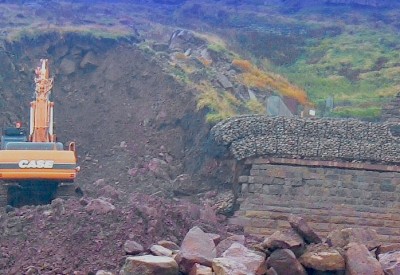
The works involved the excavation and removal of large amounts of encroaching material left by decades of cliff erosion. The watching brief was maintained during this work and revealed the presence of archaeological features and horizons associated with the 18th/19th century coal mine.
Advantages to Entec UK Limited and Copeland Borough Council
- Archaeological supervision of essential repair works to meet requirements of English Heritage.
- In house specialists in industrial archaeology able to advise on site operations.
- Rapid recording of exposed remains to reduce delays to the consolidation programme.
- Consultation with local specialist museums ensured information became publicly accessible.
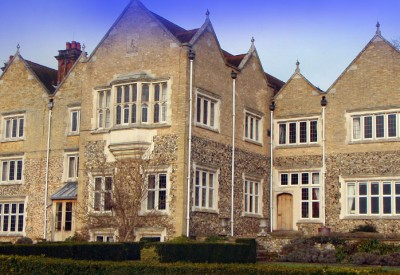
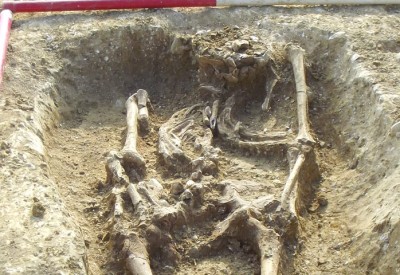
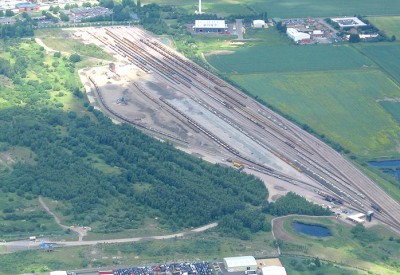
Images (above) show:-
- Many mine buildings have been lost to cliff erosion at Saltom Pit.
- Saltom Pit was England’s first undersea coal mine, situated c.1km to the south of Whitehaven Harbour.
- The works involved the excavation and removal of large amounts of encroaching material left by decades of cliff erosion.
- The National Trust wished to preserve the remains of Saltom Pit, which had fallen into disrepair.