Development sites can often contain human remains
It is essential that any required analysis is carried out by archaeologist with the utmost professionalism and sensitivity, whilst at the same time minimising loss of time and cost for the developer of the land.
Ethical treatment of human remains is a huge issue, particularly with more recent remains of known identity (18th to 20th century), as descendants can be traced. This issue can be particularly sensitive in the public domain, thus archaeologists and osteoarchaeologists must at all times act professionally and treat the dead with respect.
It must be remembered that although valuable scientific information and data can be retrieved from the study of human remains, they were living individuals once.
Categories of human remains
Broadly speaking, there are three main types of remains that need to be analysed by archaeologists.
Case study - an unexpected discovery
Angel Inn, Corbridge
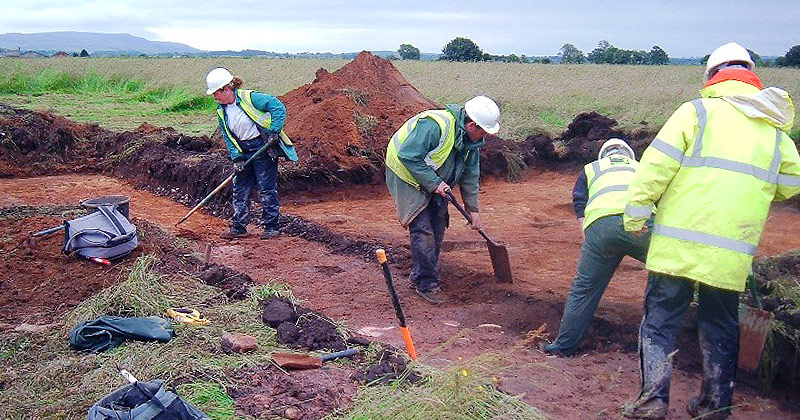
During an archaeological excavation on land at the Angel Inn, Corbridge, two articulated burials were unexpectedly discovered. Pottery recovered from the deposits revealed that they were medieval in date. Upon discovery of the remains, Wardell Armstrong Archaeology staff were able to apply for a burial licence quickly so the remains could be lifted and subsequently analysed.
The project was completed within time and budgetary constraints as a result of an efficient planning strategy.
Although the remains were discovered unexpectedly on an archaeological site, it was necessary to return these remains to a Christian burial ground. This was achieved through effective planning and careful communication between the author, the Archdeacon and the Reverend of the Church of St Oswald.