Early archaeological detection results from geophysical survey
Client: Lightsource Renewable Energy Limited
Location: Kent, UK
Project description: Geophysical survey for the construction of solar developments
Archaeological prospection using geophysical survey techniques has proven invaluable for the early detection of archaeological features prior to the construction of solar farm sites in southwest England - avoiding later delays and costs to the project.
Wardell Armstrong Archaeology were commissioned by Lightsource Renewable Energy Limited to undertake geophysical surveys at several sites in the south of England to facilitate the development of new solar farms. Geophysical survey has proved invaluable in helping to inform the planning process, and where necessary to help prevent the development impacting upon sensitive archaeological remains.
Prehistoric, Romano-British and Medieval period discoveries
At Thorne Farm, near Ramsgate in Kent, previous archaeological investigations had identified extensive archaeological remains to the north of the site, including activity dating to the prehistoric, Romano-British and Medieval periods.
Archaeological prospection using geophysical survey techniques has proven invaluable for the early detection of archaeological features prior to the construction of solar farm sites in southwest England. By providing a ‘geophysical map’ of archaeological features, designs can be changed at an early stage to avoid damage to archaeological features, and thus reduce associated costs. The gentle south-facing slopes, which are ideal for solar developments, may have also have been favoured for settlement and/or agriculture in the past.
Many solar sites have now successfully gained planning permission with the help of geophysical survey by adjusting the panel layout to avoid such sensitive areas.
Read more about geophysical survey »
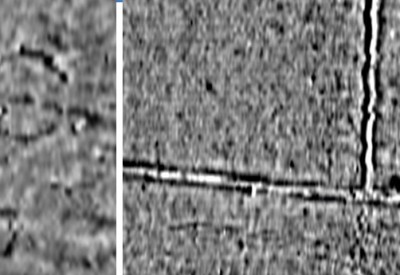
The survey undertaken at Thorne Farm revealed a number of significant features, including two possible ring ditches or small enclosures of likely prehistoric or Romano-British date, one of which fell within the north-west corner of the proposed development area. As a result the layout of solar panels at the site was adjusted to avoid impacting on the archaeological remains, the majority of the site having been shown to be free of archaeology.
Geophysical investigation, data processing and reporting
All aspects of the archaeological fieldwork were managed by Wardell Armstrong Archaeology on behalf of Lightsource Renewable Energy Limited, providing a team of professional archaeologists to undertake the geophysical investigation, data processing and reporting, including liaison with the County Archaeologist. Fieldwalking was also undertaken to provide further information required by the County Council. All work was undertaken in house to provide a fast and efficient service.
Advantages to Lightsource Renewable Energy
- Identification of potential risks to the project at an early stage.
- Rapid and cost-effective service, reducing the need for expensive archaeological trenching.
- All specialist requirements were provided in-house, including archaeology, fieldwalking and geophysical survey which cut time and costs.
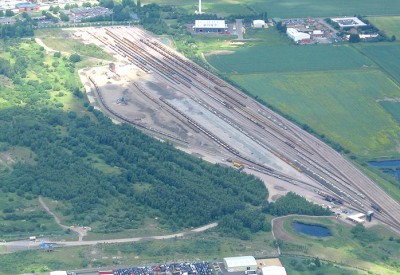
Images (above) show:-
- Geophysical survey with a gradiometer system
- Prehistoric enclosures detected by geophysical survey
- Archaeology for renewable energy solar farm