The benefit to commercial development
Developers in all sectors whether they are house-builders, utility companies, mineral extraction and mining companies or renewable energy firms, have at some time had to deal with the consequences of a planning system which requires that the presence of buried archaeological remains within proposed development sites be dealt with.
There are generally two ways in which this manifests itself.
A requirement by Local Planning Authorities for archaeological investigation to be undertaken to inform planning applications and, once consent is granted, a requirement for archaeological work to be undertaken to discharge a planning condition.
This article deals with the pre-consent stage when developers are often required to undertake what is termed in the industry ‘archaeological evaluation’.
The basic purpose of archaeological evaluation is to establish the presence or absence of buried archaeological remains within an application site and to assess the significance of those remains.
From this information a Local Planning Authority will then decide whether further archaeological investigation will be required as a condition of planning consent and what the scope of that further investigation should be.
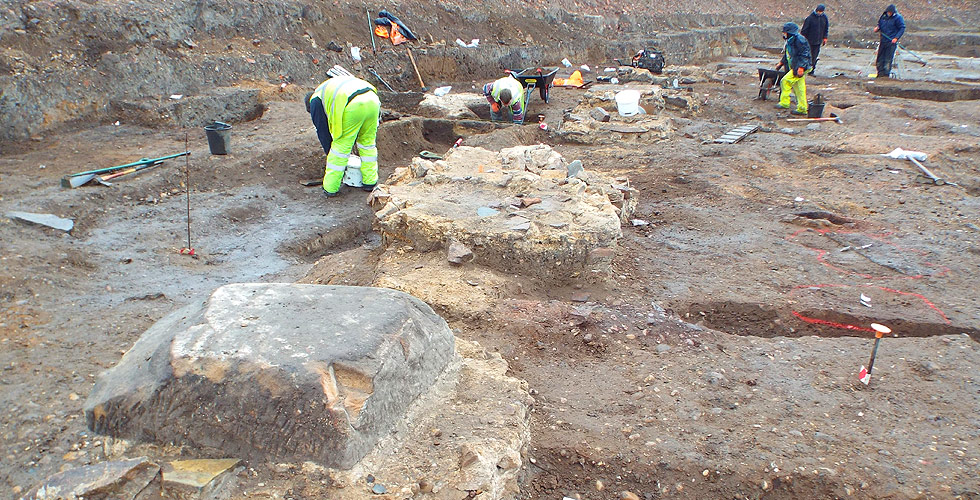
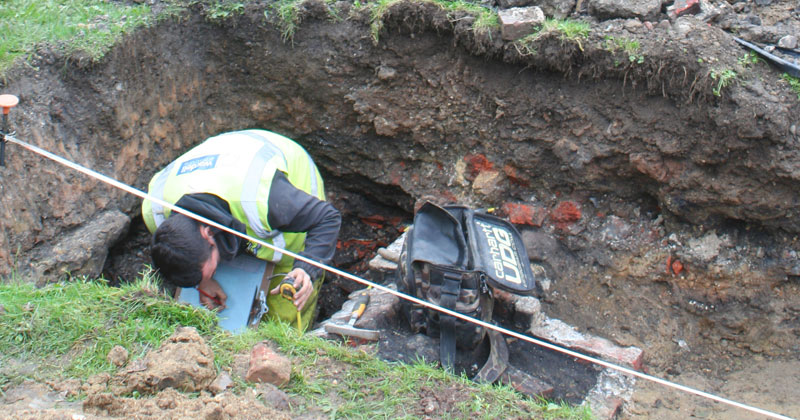
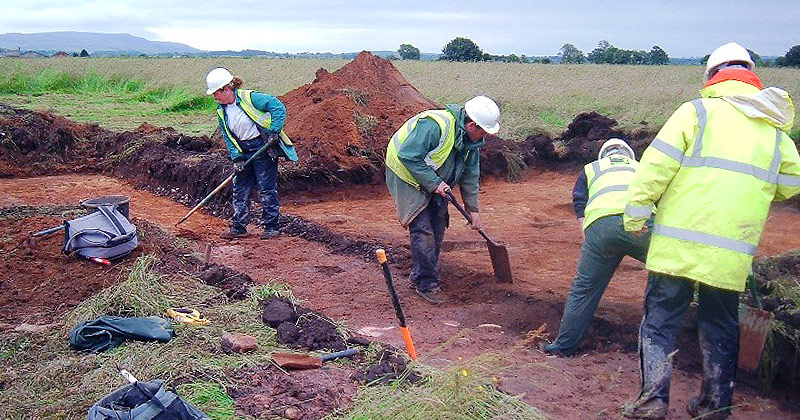
The most common techniques used to evaluate the potential archaeology within an application site are geophysical survey and trial trenching. Whilst the former is relatively rapid and cost effective, the latter can prove to be expensive (trenches are generally 50m x 2m or 30m x 2 in size) in particular on large development sites or in urban contexts where deep layers of archaeology and restricted space can result in abnormal costs being incurred in the excavation of trial trenches.
Avoiding the potential for huge additional expenditure
The last thing any developer wants to face is a substantial additional cost before planning consent has even been granted. On large sites, such as extraction sites or extensive mixed-use development sites, costs for pre-consent trial trenching can be in the range of hundreds of thousands pounds and it is no wonder that developers consider this an unacceptable cost.
Unfortunately for developers, Local Planning Authorities are supported in this requirement by national and local planning policy.
It is often difficult, if not impossible, for developers to get this requirement quashed or at the very least delayed until consent has been granted. Commonly in urban contexts, one of the complicating factors of trial trenching is that archaeological remains are deeply buried.
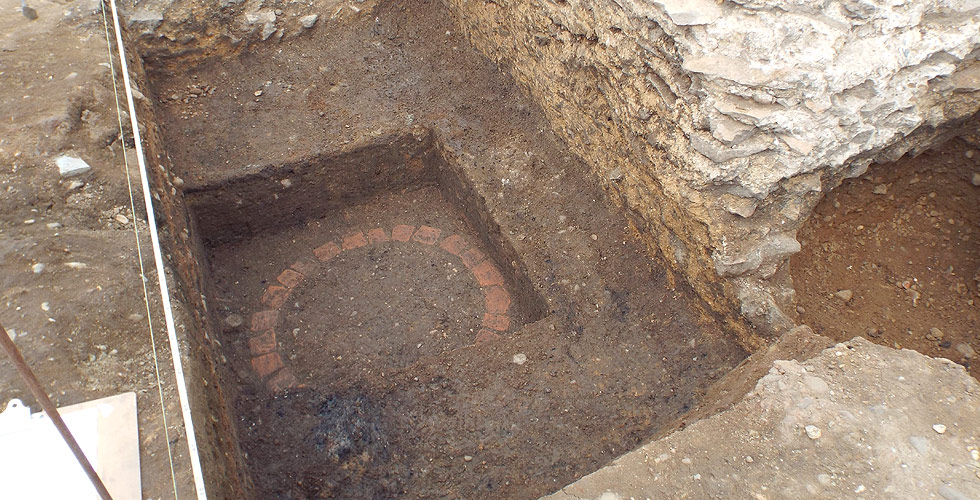
Space is often restricted and the storage and management of arisings from the trenching problematic, in some cases resulting in the developer having to incur the cost of removing the material from site (even more costly if the material is contaminated). Deep trenching to reach archaeological remains is also expensive due to the requirements for specialist shoring, plant hire and intensive staffing.
Importantly it is potentially high risk, with falls from height and trapping through collapse resulting in 15 deaths and 567 major injuries in the construction industry in Great Britain in 2012/13.
Whilst benching or stepping is often selected as an alternate method to expensive shoring this requires the excavation of a large footprint, something that is particularly problematic when space is often at a premium in urban contexts and where existing structures may potentially be affected by the extensive ground disturbance resulting from deep trenching.
Archaeological boreholing can provide huge cost and time savings for developers
Archaeological boreholing
There may, however, be light at the end of the tunnel for developers as Local Planning Authorities appear to be more willing to consider an alternative to trial trenching, especially in urban contexts. That alternative is the use of windowless sampling/boreholes which as an undisturbed sampling method is well established in geotechnical investigations to recover soil samples whose stratigraphic height, properties and characteristics are nearly identical to what they would be in-situ.
However, its application in archaeological investigations has been somewhat limited and sporadic. It is only recently that the application of this method, as an archaeological evaluative tool which can replace trial trenching, has been recognized by a number of Archaeological Planning Officers in Local Authorities.
For development in urban contexts the benefits of this archaeological evaluative approach are substantial both in terms of cost and time savings. The drilling rigs are small (can fit through a domestic doorway), light weight, highly-mobile tracked vehicles which allow access to confined and difficult to reach spaces with minimal impact. This is ideal for archaeological investigation on sites with restricted access, close-up against walls and inside buildings.
The boreholes also provide a minimal impact approach with a diameter of approximately 180mm which can easily be backfilled and reinstated precluding the problems of spoil storage and backfilling generated by trial trenching. Ground and soil conditions permitting, sampling can be achieved to a maximum depth of approximately 10 metres and due to the sealed and undisturbed nature of the samples they are suitable for the recovery of ancient environmental (insects, molluscs, charred plant remains and pollen) and archaeological/artefactual evidence which can help to establish the date, nature and significance of archaeological remains without the need for large-scale, expensive trenching.
This substantially cuts the costs of pre-consent archaeological evaluation for developers.
The archaeological drilling of boreholes can happen simultaneously with geotechnical investigations thus reducing potential delays and minimising costs or the logs that are generated during archaeological drilling can be used by geotechnical contractors as additional data from an unexpected source!
There is a clear overlap between archaeological borehole drilling and geotechnical investigations and where they are used in tandem there can be massive benefits for developers in urban contexts on a number of levels.
Wardell Armstrong Archaeology with its expertise in archaeological evaluation using boreholes in combination with its access to specialist geotechnicians within its parent company, Wardell Armstrong LLP, is in a strong position to offer existing and future clients major benefits with a tailor made package of services.