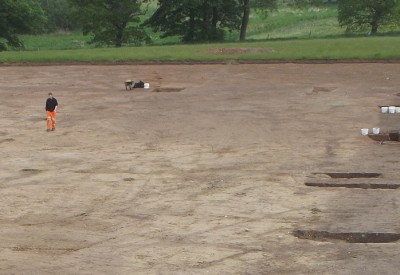
Roman and Iron Age features investigated and abundant pottery recovered
Time frame: Beginning of March 2014
Further updates from the Blackfriars archaeological dig in Leicester
All Blackfriars site updates »
Feature image: The image at the top of the page shows the recording of the northern end of the Roman buildings. Note that the gap in the wall is made by a later ditch and medieval pit cutting through the walls and resulting stone removal.
An improvement in the weather has meant progress has been excellent over the past few days. The southern end of the site is nearing completion with all features excavated and recording underway. The ‘middle’ section of the site is under excavation at the moment with multiple phases of Roman and Iron Age features being investigated and recorded, with abundant pottery being recovered.
A Sherd from a Samian bowl with a decorated design
Excavation of the northern end of the site is underway with the Roman building(s) being investigated with sizable quantities of masonry being uncovered including column bases and heavily robbed walls.
Overview showing the team at work excavating, sampling and recording
The site currently has multiple phases of archaeology with probably two or more phases of Iron Age activity, three or more phases of Roman activity and multiple medieval features cut into the earlier archaeology. Abundant quantities of pottery have been recovered which will allow the exact phasing of the site to be pieced together during post-excavation.
Samian pottery with maker’s stamp
The walls of the buildings have been extensively removed with the stone probably being used to build other buildings in the area, possibly the Blackfriars Friary.
Planning features prior to excavation
Trowelling away to expose a layer of stone and ceramic building material (e.g. brick, roof tile). These layers probably formed when the building fell into disrepair and fell apart or collapsed
Proposed high quality student accommodation
Wardell Armstrong Archaeology are working in partnership with developers Watkin Jones, who are enabling the safeguarding and cataloging of all developments and artefacts on the site. When the dig has finished, attention will turn to the proposed development of high quality student accommodation.
Watkin Jones have created well over 25,000 student accommodation units in prime locations at key university sites nationwide since 1999.
Computer generated image of the Bath Lane elevation of the proposed student
accommodation, viewed from the Riverside path
Watkin Jones who are developing the site for proposed student accommodation, are funding the excavation and in agreement with the City Archaeologist will be sending out regular updates on the progress of the excavation and on the finds which are being recovered via
The aim is to ensure that information on the excavation is put into the public domain and that the local community, as well as the wider public, have an opportunity to share in this interesting archaeological project.