Iron Age, Roman and medieval features
Time frame: End of February 2014
Regular updates from the Blackfriars archaeological dig in Leicester
All Blackfriars site updates »
New information from the Wardell Armstrong Archaeology managed excavation at Blackfriars in Leicester, where Watkin Jones are developing the site for proposed student accommodation.
Feature image: The image at the top of the page shows an alignment of Roman column bases.
A column base with tool marks on the near face
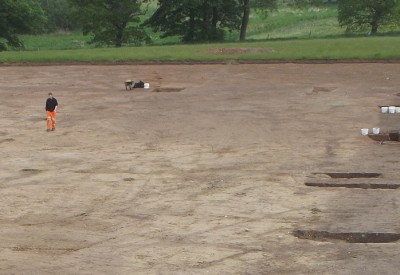
Excavation and recording of features has continued despite the awful weather conditions with a range of Iron Age, Roman and medieval features being identified. The focus remain at the southern end of the site, which will provide a useful location for spoil and drain water to be tipped when excavations in this area are complete.
Shell-tempered sherd of an early Roman storage jar (mid to late 1st
century).
Shell was added as a temper to help prevent shrinking and cracking
during firing. This pottery fabric would have been used in the production of
jars, bowls and dishes
Cleaning up the postholes and beam slots of the early Roman phase
A half-sectioned medieval pit at Blackfriars in Leicester
Evidence for medieval activity is present in the form of pits which cut the earlier archaeology and have been filled with typical medieval pottery.
Excavated Iron Age enclosure ditch and the tools of the trade!
A further two pieces of Iron Age coin mold have been discovered from the Iron Age ditch seemingly confirming that we have a high status enclosure.
Exposed section of Roman masonry at Blackfriars in Leicester
It appears that we have an Iron Age enclosure which was subsequently followed by a series of Roman phases including the standing and robbed foundations of building(s).

Bagging up finds at Blackfriars in Leicester
Recording the archaeology at Blackfriars
Excavating pits at Blackfriars
Proposed high quality student accommodation
Wardell Armstrong Archaeology are working in partnership with developers Watkin Jones, who are enabling the safeguarding and cataloging of these intriguing Iron Age, Roman and medieval developments and artefacts - and helping to make the results widely available to the general public. When the dig is complete, attention will turn to the proposed development of high quality student accommodation.
Watkin Jones have created well over 25,000 student accommodation units in prime locations at key university sites nationwide since 1999.
Computer generated image of the forthcoming student accommodation to
be developed by Watkin Jones
Watkin Jones who are developing the site for proposed student accommodation, are funding the excavation and in agreement with the City Archaeologist will be sending out regular updates on the progress of the excavation and on the finds which are being recovered via
The aim is to ensure that information on the excavation is put into the public domain and that the local community, as well as the wider public, have an opportunity to share in this interesting archaeological project.